
Maintaining that the Indian economy was resilient to oil price shocks, Reserve Bank of India Governor Y V Reddy on Wednesday said the oil prices needed to be closely monitored, though it is not a disturbing factor.

A potential US-Iran peace deal, expected to be signed on June 19, is anticipated to ease geopolitical stress and benefit various sectors, particularly in India, with analysts suggesting investors await finer details before making significant moves.

Analysts are revising down India Inc's financial year 2026-27 (FY27) earnings growth forecasts, citing persistently high crude oil prices above $100 a barrel due to the West Asia conflict, which is expected to dent corporate financial performance in the coming quarters.
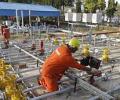
India is the world's fourth-largest importer of natural gas, accounting for six per cent of the global market.

Markets face risk of a prolonged bear phase as oil shocks and geopolitical tensions test inflation, growth and investor confidence globally, points out Debashis Basu.

Indian benchmark indices Sensex and Nifty rebounded in early trade, tracking a recovery in global equity markets and an easing of hostilities between Israel and Iran, after a sharp fall in the previous session.

Indian benchmark equity indices, the BSE Sensex and NSE Nifty, experienced a significant drop in early trade due to elevated oil prices, weak global market trends, and renewed fears of military operations in the Middle East following US President Donald Trump's statements regarding Iran. Track Sensex, Nifty on May 20.

Indian benchmark stock indices, Sensex and Nifty, recorded their fourth consecutive day of declines, driven by selling in FMCG, financial, and auto sectors. The downturn is attributed to fresh tensions in the Middle East, uncertainty surrounding the US-Iran 60-day ceasefire, and elevated crude oil prices.

Moody's said it expects exposure to low oil prices to shave off 0.8 per cent from real GDP growth on average across oil exporting countries in 2016.

'Rather than deploying all their money at once, investors should invest gradually.' 'A staggered approach is the better strategy because volatility is likely to persist.'

From February to mid-March, oil prices receded rapidly.

Indian benchmark indices Sensex and Nifty rebounded on Wednesday, driven by value buying in banking stocks and select heavyweight counters, with the Sensex climbing 332.63 points and the Nifty ending above 23,200.

The Indian rupee is highly vulnerable among Asian currencies, with Barclays and MUFG warning of a potential depreciation towards 100/$ if the West Asia conflict persists, driven by widening current account deficits and elevated crude oil prices.
Oil prices fell from their two-year highs on Tuesday, as pressure mounted against an immediate attack on Iraq, lessening fears of a possible disruption of oil supplies from the world's eighth-largest exporter.

Iran has strongly rejected former US President Donald Trump's assertion that the Strait of Hormuz is 'NEW U.S. TERRITORY', with top officials warning that his 'delusions' would be 'corrected' and highlighting the gap between Washington's claims and its actual influence over the strategic waterway.

Indian stock markets experienced a significant sell-off, with the Sensex tumbling over 1,300 points, driven by escalating crude oil prices due to US-Iran tensions and Prime Minister Narendra Modi's call for austerity measures, which amplified investor concerns about India's economic outlook.

Despite the recovery to above $40 levels after hitting $28-29 in Jan, worries of over-supply in the face of weak demand remain.

The rupee weakened to a record low against the US dollar due to Gulf tensions, rising oil prices, and foreign capital outflows.

Maruti Suzuki, India's leading passenger vehicle manufacturer, is experiencing robust growth in the June quarter, driven by a recovery in the entry-level segment, easing supply constraints, and significant market share gains. Despite potential headwinds from El Nio, analysts remain optimistic about the company's future performance.

'The real shock is going to be from a deficient monsoon.'

US President Donald Trump stated that Iran is eager to make a deal and predicted a sharp decline in oil prices due to abundant supply, amidst a Senate resolution to limit his war powers in Iran.
Pushing a barrel of oil back to around $100 would require a reduction of production of about two million barrels a day - a cut that would fall predominantly on Saudi Arabia.

The government should start with two assumptions: first, that oil prices are fundamentally unstable and susceptible to wide fluctuations, and second, that raising the prices of petroleum products is politically difficult.
Countries have to start replenishing inventories soon, supply remains tight, and the fall in demand isn't large enough all of which suggests higher prices
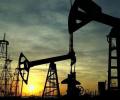
Soft oil prices are expected to persist in 2015 and will be accompanied by significant real income shifts from oil-exporting to oil-importing countries.

International oil prices jumped to the highest level since 2014, topping $87 a barrel but domestic petrol and diesel prices remained unchanged for the 74th day in a row - a freeze that may be linked to ensuing assembly elections in states like Uttar Pradesh and Punjab. Brent - the key global oil benchmark - soared to $87.7 per barrel mostly due to rising geopolitical tensions and supply-side disturbances due to Yemen's Houthi group's attack on oil facilities in the United Arab Emirates. Also, global inventories are waning. The attack, some analysts believe, may lead to more hostile behaviour between the two power centres in the Middle East - Iran and Saudi Arabia.

The real benefits can be seen when prices stabilise, preferably at levels acceptable to both consumers and producers.

Indian markets on Dalal Street rallied sharply as easing tensions in the US-Iran conflict and stable oil prices boosted sentiment. Track Nifty 50 and BSE Sensex performance and key global triggers.

'Regulations give a particular minimum amount of shares to be given in the OFS or IPO -- without which one cannot do the IPO.' 'We got that number on the day of filing of updated DRHP -- sufficient for us to go live with the IPO.'

Reliance Industries Ltd reported a 22 per cent year-on-year decline in consolidated net profit for the June quarter, primarily because the previous year's earnings were inflated by a one-time gain from the sale of its stake in Asian Paints.

Insights from behavioural economics suggest that an ambitious nudge can be effective if three conditions are met, points out Ram Singh Insights from behavioural economics suggest that an ambitious nudge can be effective if three conditions are met, points out Ram Singh, director, Delhi School of Economics.

This means lower losses on fuel sales by Indian oil companies and a shrinking oil subsidy bill for the government.

Former Haryana Chief Minister Bhupinder Singh Hooda has criticised the newly introduced fees on UPI payments, stating they will lead to increased inflation for the common man. He dismissed government claims that customers would not be burdened, arguing that merchants would pass on the costs. Hooda demanded the immediate withdrawal of these fees, highlighting that the government's move contradicts its 'Digital India' initiative.
The Indian rupee weakened to a record intra-day low against the US dollar due to a strengthening greenback, continuous foreign capital outflows, and elevated global crude oil prices amidst the West Asia conflict.

The US has informed allies it will avoid new military strikes on Iran, instead focusing on economic sanctions and maritime enforcement, particularly in the Strait of Hormuz. This strategic shift aims to intensify pressure on Tehran's economy and oil exports while keeping the military option open if Iran initiates aggression. Diplomatic efforts continue amidst persistent regional tensions and maritime incidents.

Moody's Analytics predicts India will remain the fastest-growing major economy in 2026 and 2027, but its pace will moderate due to a global slowdown, geopolitical risks, and financial market volatility, despite the boost from AI demand.

The US has granted India permission to buy Russian oil already in transit to ease global supply pressures amidst the West Asia conflict. This decision comes after India agreed to halt sanctioned Russian oil purchases and substitute them with US oil.

The Indian rupee rebounded against the US dollar after the Reserve Bank of India (RBI) restricted banks' net open positions in dollars. This move prompted banks to sell dollars, providing temporary support for the rupee amidst ongoing geopolitical tensions and rising oil prices.

Monthly gold imports have declined to 25-30 tonnes from 70-80 tonnes while recycling of old jewellery has increased following the recent hike in import duties.
